 The Kitsap County Board of Commissioners unanimously adopted an ordinance on October 12, 2026 authorizing an additional sales and use tax of one-tenth of one percent for criminal justice purposes.
A strong justice system is something we all depend on. It helps keep our communities safe, holds people accountable, protects the rights of victims and defendants, and ensures disputes are resolved fairly.
Cities provide important parts of the justice system, including local police and municipal courts. County government provides essential services that serve people across the entire Kitsap Peninsula. These services include the Sheriff's Office and County Jail, Prosecuting Attorney's Office, Superior and District Courts, County Clerk, Juvenile Services, Fire Marshal, and Medical Examiner.
County property taxes are an important source of funding for this important regional justice infrastructure. That means residents who live within city limits also help support the county services that are available to them, their families and their neighbors. The services are provided based on need—not on whether someone lives inside or outside a city.
Together, city and county services form a connected justice system. Most of us hope we never need these services personally, but we all benefit from having them available when we do—and from knowing they are there for our neighbors when they need help.
About the criminal justice services tax
Kitsap County adopted a local 0.1% sales and use tax dedicated to supporting criminal justice services. The regional justice and sales use tax is set to take effect January 1, 2027, and is expected to generate $7.7 million annually.
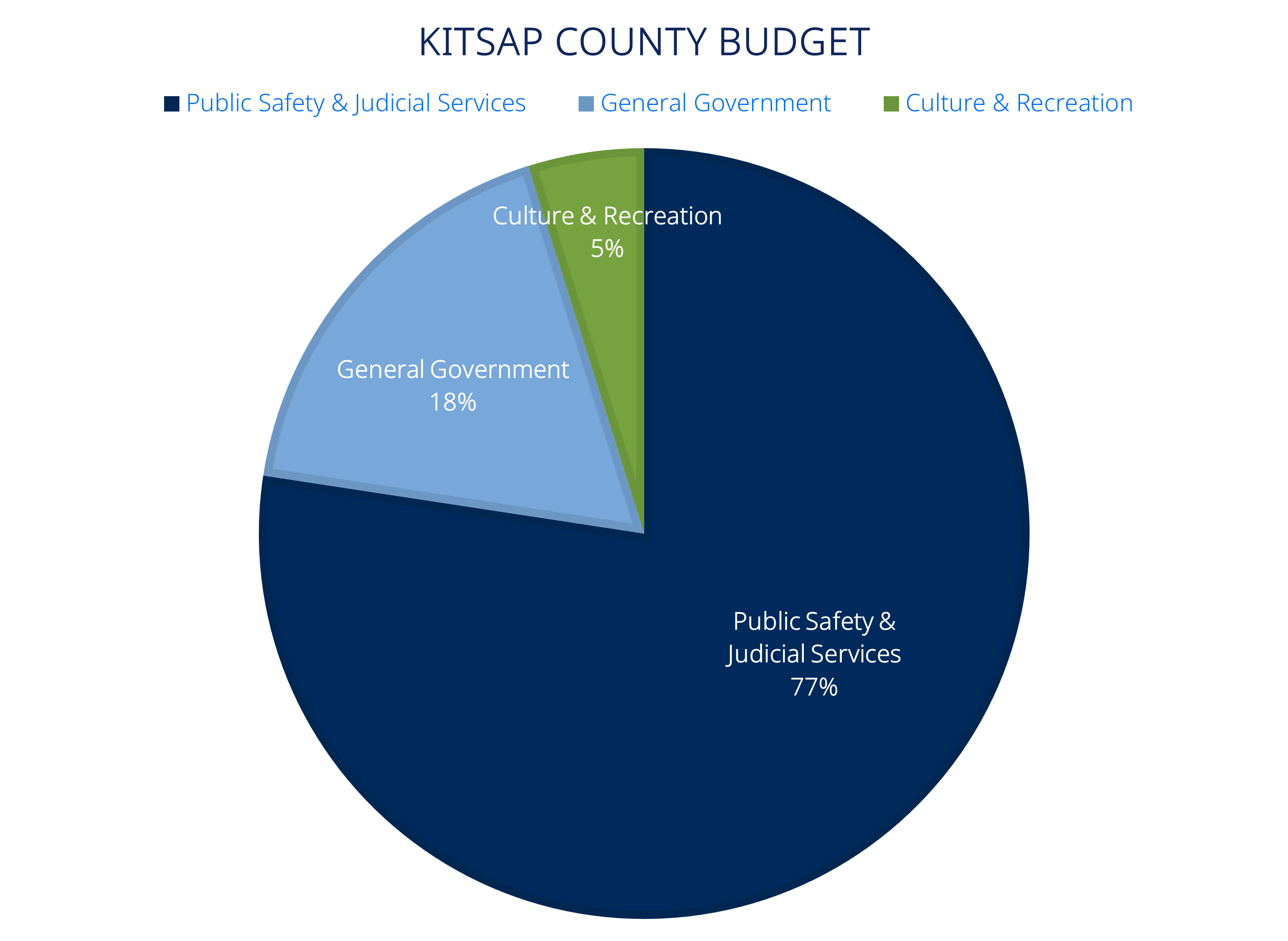
Kitsap County's $138 million General Fund pays for basic County services like the courts, law enforcement, jail operations, and more — essential functions that residents expect from County government. Public safety accounts for more than 76% of the General Fund, but costs for staffing, state mandates, and core services are growing faster than revenue.
The County's most stable source of revenue, property tax, is capped at 1% growth per year by state law, while the cost of providing services continues to rise.
In 2025 the Washington State Legislature adopted House Bill 2015, which gives local governments the ability to implement a local 0.1% sales and use tax dedicated to public safety, as long as the law enforcement agencies that benefit from the funding meet specific standards on policies and training.
Jurisdictions must meet standards established by the Washington State Criminal Justice Training Commission (CJTC), including requirements for use-of-force policies, training, reporting, and accountability. By meeting these requirements, the County will also be eligible to apply for additional grants through CJTC. The Kitsap County Sheriff's Office meets these additional requirements.
What will the Regional Justice Service Funds pay for?
Kitsap County must use the collected sales and use tax only for criminal justice and public safety investments. The tax will help maintain existing funding levels such as:
- Current law enforcement and corrections staffing and retention
- Courts, prosecution, and public defense services
- Equipment and technology upgrades
- Prevention, treatment, and reentry programs
How will the sales tax increase impact me?
For most residents, an increase of 0.1% sales and use tax would mean approximately $20-$40 more per year, depending on household spending.
Why did Kitsap County implement the sales and use tax?
Washington state continues to rank last nationally in law enforcement staffing per capita, making further staffing reductions especially difficult. Additionally, by 2029, the County's jail medical costs are projected to reach $8.9 million.
Without the funding available through HB 2015, the County would be forced to consider significant reductions in 2027. Implementing the new sales tax helps reduce pressure on criminal justice services in 2027 and allows the County to maintain current service levels. Funding will also help reduce the risk of prosecution delays, helping ensure cases continue to move through the justice system without unnecessary disruption.